
Tubbataha
08°51′N 119°55′E — LIVEABOARD — 5–40M — 27–30°C — MAR–JUN
— The brief —
Tubbataha is not somewhere you dive so much as somewhere you reach. Two atolls and a single outlying reef, sitting alone in the middle of the Sulu Sea, a hundred and fifty kilometres from the nearest land. There are no resorts, no day boats, no shore entries. For roughly three months a year the sea is calm enough to cross; the rest of the year the park is closed and left to itself. That closure is not an inconvenience to work around — it is the whole reason the place is what it is.
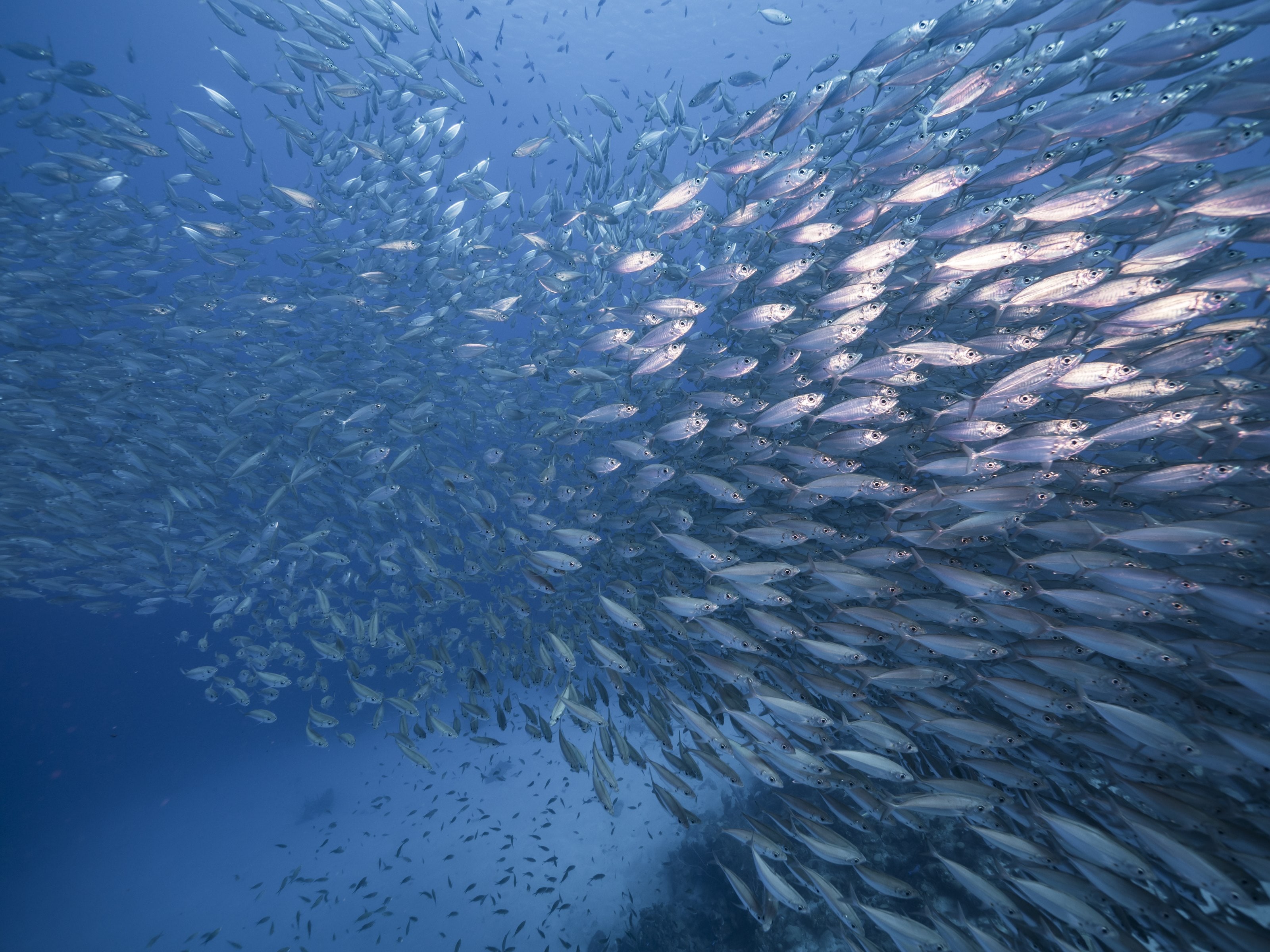
What it is, is one of the few reef systems left that shows you what a reef looks like when it is simply left alone. The numbers do some of the work: around 360 species of coral, close to ninety per cent of everything recorded in the Philippines, and something on the order of 600 fish species across the park. Eleven kinds of shark, the densest population of whitetip reef sharks known anywhere, and the last seabird rookery left in the country nesting on its islets. It has been a UNESCO World Heritage Site since 1993 and a Ramsar wetland of international importance since 1999. But the numbers are the byproduct. The point is the density — a reef running at full volume, the way reefs are supposed to and almost nowhere still do.
It earns its place on our list by being honest about what it asks. The diving is vertical: walls falling straight into blue water, current that moves you, big animals that expect you to hold your own. This is not a muck slope or a checkout site. It rewards divers who are comfortable in open water and don't need the reef held still for them — which is precisely why it's worth building towards rather than starting with.
THE CONDITIONS
Tubbataha
08°51′N 119°55′E
LIVEABOARD · 5–40M
| J | F | M | A | M | J | J | A | S | O | N | D | |
|---|---|---|---|---|---|---|---|---|---|---|---|---|
| Water temp | ||||||||||||
| Whitetip reef shark | J: not typically seen; F: not typically seen; M: resident; A: peak; M: peak; J: resident; J: not typically seen; A: not typically seen; S: not typically seen; O: not typically seen; N: not typically seen; D: not typically seen | |||||||||||
| Grey reef shark | J: not typically seen; F: not typically seen; M: resident; A: peak; M: peak; J: resident; J: not typically seen; A: not typically seen; S: not typically seen; O: not typically seen; N: not typically seen; D: not typically seen | |||||||||||
| Green & hawksbill turtle | J: not typically seen; F: not typically seen; M: resident; A: peak; M: peak; J: resident; J: not typically seen; A: not typically seen; S: not typically seen; O: not typically seen; N: not typically seen; D: not typically seen | |||||||||||
| Jack & barracuda schools | J: not typically seen; F: not typically seen; M: resident; A: peak; M: peak; J: resident; J: not typically seen; A: not typically seen; S: not typically seen; O: not typically seen; N: not typically seen; D: not typically seen | |||||||||||
| Manta ray | J: not typically seen; F: not typically seen; M: present; A: present; M: present; J: present; J: not typically seen; A: not typically seen; S: not typically seen; O: not typically seen; N: not typically seen; D: not typically seen | |||||||||||
| Scalloped hammerhead | J: not typically seen; F: not typically seen; M: present; A: present; M: not typically seen; J: not typically seen; J: not typically seen; A: not typically seen; S: not typically seen; O: not typically seen; N: not typically seen; D: not typically seen | |||||||||||
| Whale shark | J: not typically seen; F: not typically seen; M: present; A: present; M: present; J: present; J: not typically seen; A: not typically seen; S: not typically seen; O: not typically seen; N: not typically seen; D: not typically seen | |||||||||||
| SEASON | J–F: PARK CLOSED; M–J: open; J–D: PARK CLOSED | |||||||||||
PEAKRESIDENTPRESENTPARK CLOSED
- Walls & drop-offs
- Wide-angle
- Coral health
- Pelagics
- Ease of access
Beneath the surface
Every destination has a duality; for Tubbataha the honest one is vertical against horizontal — the walls that draw everyone, and the reef-top most of them swim over on the way there.
The walls
The signature. Sheer coral walls falling from the reef-top into open blue — in places a near-perpendicular drop of a hundred metres — with the current running along them and the big fish stacked up in it. This is where the sharks are: greys and whitetips in numbers you don't see on managed reefs, patrolling the drop-offs and resting on the sand shelves at sites like Shark Airport. Amos Rock on the Southwest Wall is the one people describe afterwards — soft coral, hard current, reef sharks working the edge. Delsan Wreck sits where the reef-top slopes off into a wall, its schools of jacks, snappers and barracuda thick enough to close out the light. Black Rock is the pelagic gamble — mantas, tuna, whatever the blue brings that day.
Diving the walls is about buoyancy, awareness and letting the water do the moving. It's the most rewarding diving in the park and the least forgiving of bad habits.
The atoll
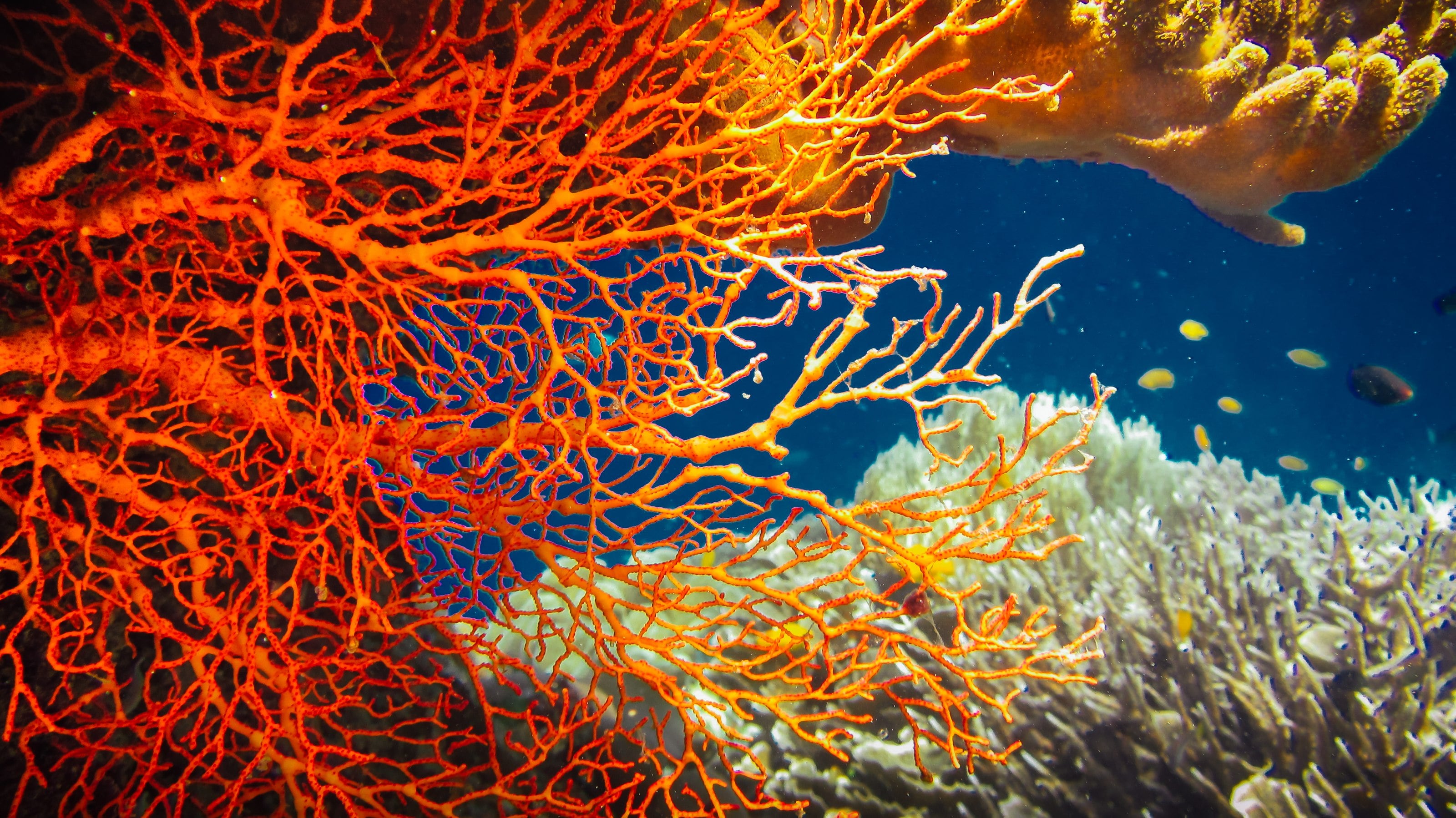
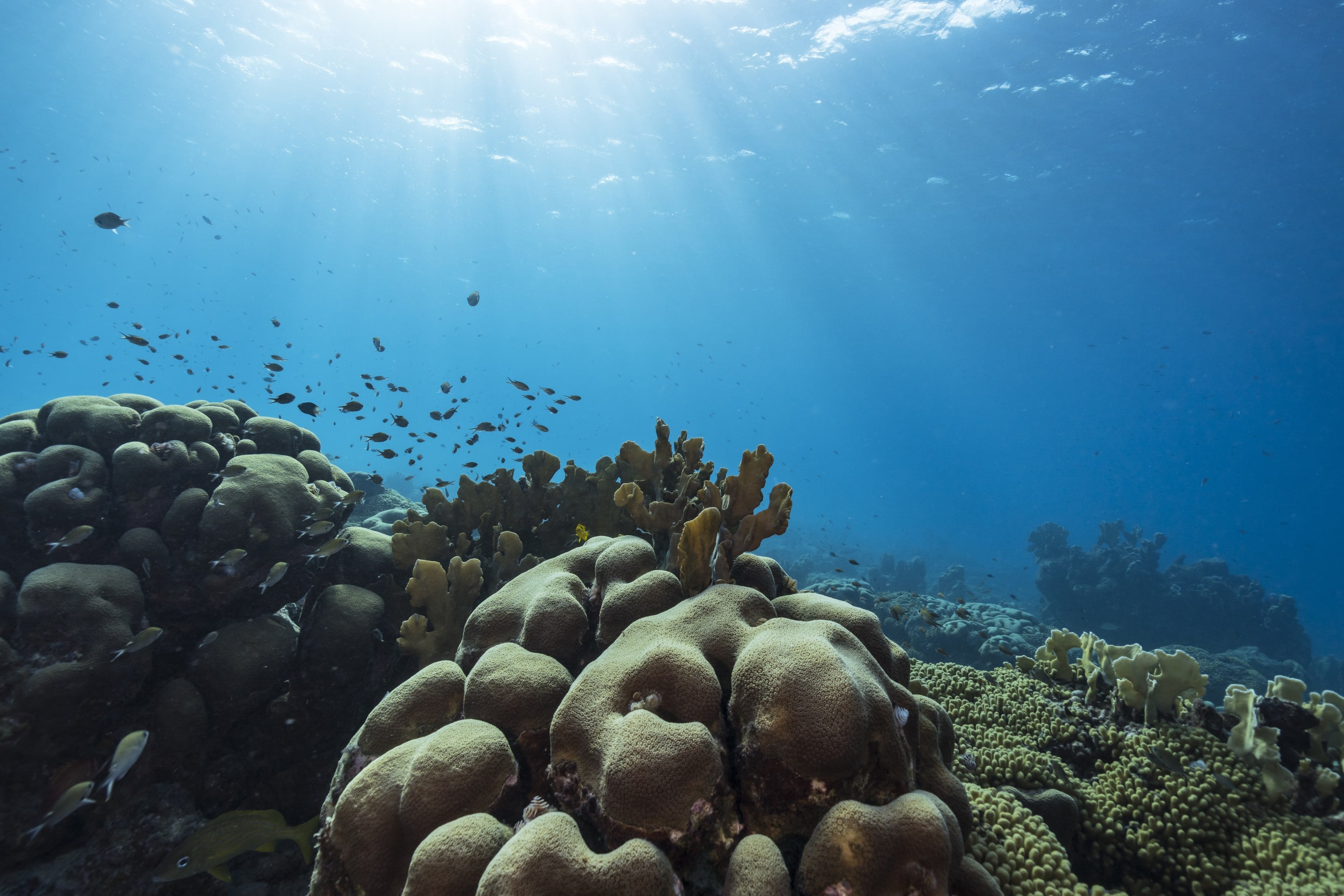
Then there's the reef itself — the shallow top of the atolls and the coral gardens most divers under-rate because the walls are shouting louder. This is the wide-angle diving: healthy hard coral running to the horizon, turtles grazing the shallows, the reef reading as garden rather than cliff. Jessie Beazley, the outlying reef north of the main atolls, is the clearest version of it — a shallow, coral-dense site built for a wide lens and a calm dive. The Malayan Wreck, settled onto the shallow reef-top and long since grown over, is where the patient divers go looking small: nudibranchs and camouflaged life in the soft coral, the closest thing Tubbataha offers to a critter dive.
It's a different pace from the walls, and a necessary one — the park isn't only its drop-offs. One honest caveat, and it surfaces in the ledger too: Tubbataha is not a macro destination. If it's frogfish and muck you're chasing, that's Dauin's water. What Tubbataha does that almost nowhere else still does is scale and health at the same time.
The week
Eight days, unhurried, most of it at the reef. You'd fly into Puerto Princesa and settle a day ahead — the crossing is long, and the park briefing and fees are handled before you board. Then an evening embarkation and an overnight passage out into the Sulu Sea, so you wake up already there.
The days that follow are the reason for the rest: repeated dives across the North and South Atolls and out to Jessie Beazley, the walls in the sharper light of morning, the reef-tops when the current eases, evenings spent somewhere with no land in any direction. A small group, no schedule beyond the tide and the light, then the passage back the way you came. What the week looks like exactly depends on the sea and the group — which is a conversation, not a price list.
Above the waterline
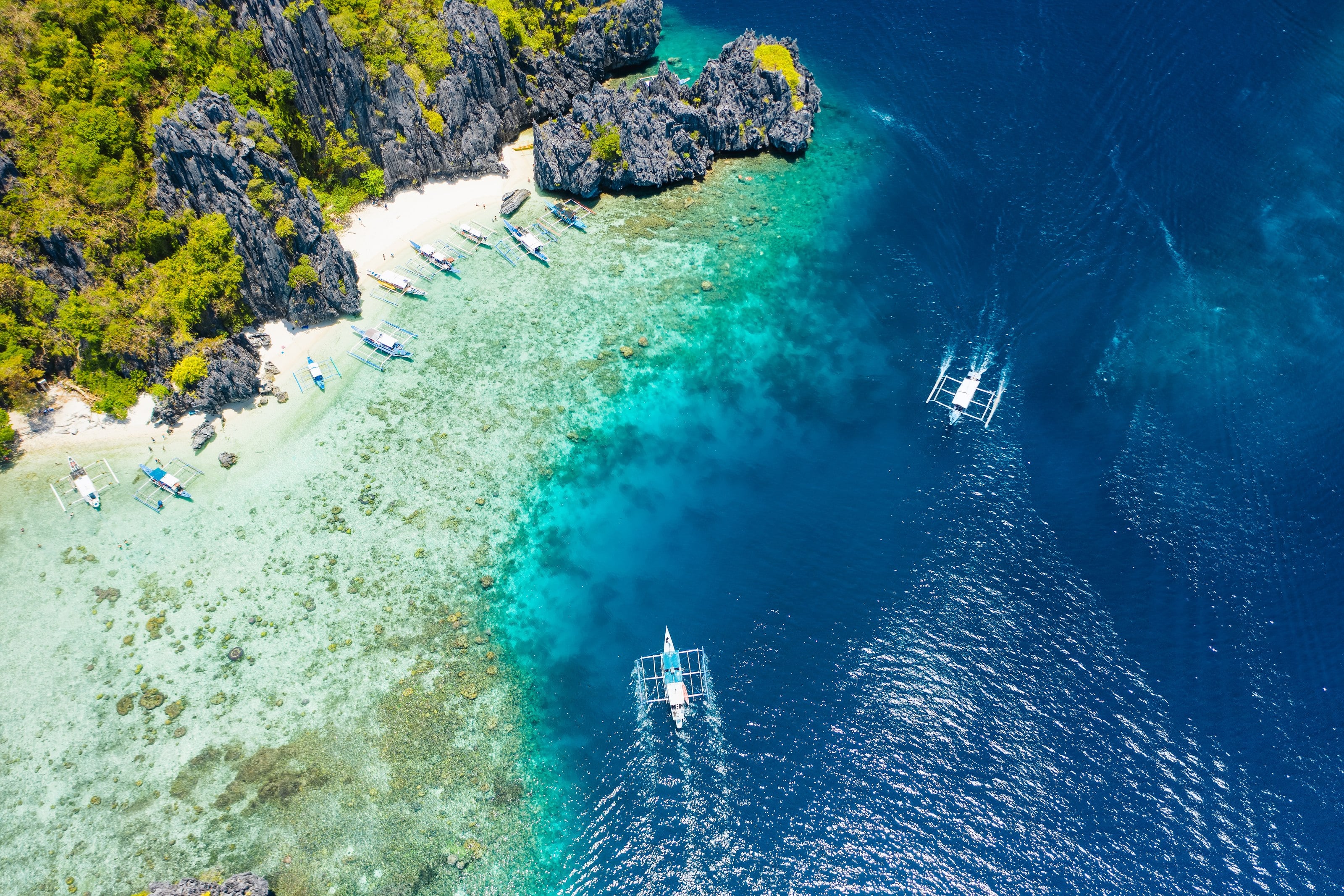
There isn't much above the waterline, and that's the point. Two low coral islets — Bird Islet and South Islet — hold the last seabird rookery in the Philippines: boobies, terns and frigatebirds nesting where turtles also come ashore. On the North Atoll a ranger station stands watch year-round, teams rotating out for two months at a stretch to run patrols around the clock; the protection isn't a policy on paper, it's people living on a platform in the open sea to enforce it.
Beyond that it's water and sky — no resort strip, no signal, the horizon unbroken in every direction. Puerto Princesa and the wider Palawan coast are the gateway either side of the trip, worth a day or two of their own, but Tubbataha itself is the rare destination that is only its reef.
— The practical file —
- Getting there
- Fly Manila (MNL) to Puerto Princesa (PPS), roughly an hour. Liveaboard only — the boat boards in Puerto Princesa and crosses ~150 km overnight (10–12 hours) into the Sulu Sea. No day trips, no resorts, no shore diving. Arrive a day early for a flight buffer and the park briefing.
- Season
- Mid-March to mid-June, and no other time — the park is closed the rest of the year. Peak is April–May, when the sea is calmest and visibility best. A May 2027 trip sits squarely in that window.
- Conditions
- Visibility commonly 30 m+; water around 28–30°C in season. Current is a feature, not an exception. Suggested exposure: 3 mm, with 5 mm an option for repetitive deep days.
- Who it suits
- Intermediate and up. Blue-water walls, current and remoteness make it a poor first-week destination and a superb tenth one. Confident newer divers can dive it well with the right guidance and the right group. No medical facilities on site; the nearest recompression chamber is Cebu City — dive conservative, well inside limits, and leave 24 hours before flying.
- Fees & park rules
- A Tubbataha conservation fee is payable per diver on arrival in Puerto Princesa, direct to the Tubbataha Management Office (≈ USD 145). Strict no-touch park: no gloves (unless a medical certificate is carried), no reef hooks, no tank bangers, no pointers, and no single-use plastics aboard.
- Booking
- The season is short and the vessels are few; popular April–May dates go 9–12 months ahead, some further. Enquire early.